Posts

Showing posts with the label Reading

Games Stories

Image
  Photo: https://pixabay.com/illustrations/storytelling-fantasy-imagination-4203628/ For this weeks readings we were assigned with the readings:  What Every Game Developer Needs to Know about Story , by John Sutherland,  Mass Effect 2: A Case Study in the design of Game Narrative  and the video  https://www.youtube.com/watch?v=NyMndWpihTM .  In the reading  What Every Game Developer Needs to Know about Story , it discusses how games are developing all the time and with this comes a want for more in dept storytelling. That people want a more human experience in their games, and story is a universal human experience. This blog post states that we need to remember that games are not movies, and that story need conflict. Story telling is a collaborative effort within the team creating games and the whole team must know at-least the basics of creating the story.  In the video, it talks about interactive games and just how interactive they are. He says...

Week 9 Reading and Writing

Image
  1. Looking back: Personally I have found the readings for this module fairly achievable each week, one thing I've struggled with is the writing as I find academic writing quite difficult but I also find reading and writing up on the readings each week has helped me with this. So far I think that my favourite reading has been the readings on the game design documents, for this reading we were assigned with    Communication and Game Design Documents ,    How to Write a Game Design Document  and   BenderWaffles  video example of a GDD. I found this weeks readings to be the most beneficial and interesting for me personally as I was unaware that so much planning and research/development goes into creating games. A GDD is essentially a document with a variety of headings that help with memory aid in creating games and useful for group work and working in a team so that everyone can get their ideas across and communicate them  efficientl...

Game Fun

Image
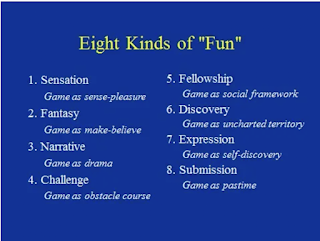
 For this weeks readings we were tasked with reading up on fun in games and with the papers:    Gamification what has fun got to do with it? ,    Putting the “Fun Factor” Into Gaming: The Influence of Social Contexts on Experiences of Playing Videogames  and the video  https://www.youtube.com/watch?v=6sZJYA06z7Y  . In the context of games and gamification fun is 'pleasurable engagement' which provides a useful distinction with regards to the more passive aesthetic pleasure and entertainment.  Marc Le Blanc's 8 types of fun :  Fun is described as being a learning space that grabs our attention, challenges us and reveals infinite depth. A denser possibility space gives us much more to learn and engage with. Fun is a dopamine in our brains that fires when we are presented with a new challenge to learn from. Fun is the feedback the brain gives us when we are absorbing patterns for learning purposes. Games can be fun, but they also can be abo...

Games Decisions

Image
 For this weeks readings we were tasked with  Building a Princess Saving App  ,    Flow experience in computer game playing among Thai university students   and with watching the video   https://www.youtube.com/watch?v=3H8pQyyXxHg.  In this weeks readings we learn about flow theory. Flow theory is the psychological theory to keep players engaged and entertained whilst playing a game. Game designers create challenges in the game to match the players skill level so that the game does not become to anxiety inducing by making it too challenging or too boring by making the game too easy. The structure of flow experience can be divided into two flows being cognitive flow and emotional flow. The cognitive flow reflects on qualities such as evaluation, expectation, control and decision making and consists of 1. challenge skill balance, 2. clear goals and 3. unambiguous feedback whilst emotional flow consist of 1. action awareness merging, 2...

Games GDD

Image
  game design document For this weeks reading we were tasked with  Communication and Game Design Documents ,    How to Write a Game Design Document  and    BenderWaffles  video example of a GDD. Essentially a GDD or a Game Design Document is a document that helps to unfold memory aid and communication tool. As developing a game takes a significant amount of time, designers tend to forget their original or early on designs, so they use a GDD to record early on ideas and designs. As you are most likely working with a team to generate ideas and designs a GDD is also used to communicate these ideas with the rest of the team.  A GDD is broken down into these headings:  Game Design Overview Detailed Design Doc Story Overview Technical Design Doc Pipeline Overview System Limitations Art Bible Concept Art Overview Game Budjet Story Bible Script Game Tutorial and Manual Walkthroughs Some of the rules in creating a good GDD include knowing your ta...

Games MDA

Image
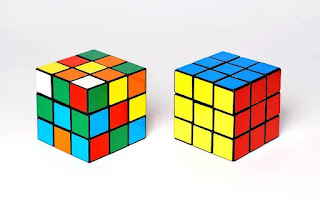
  Puzzle This week we were tasked with reading ' MDA: A Formal Approach to Game Design and Game Research ', 'Design, Dynamics & Experience(DDE for Game Design)'  and finally to watch this video. The first paper I read was 'MDA a Formal Approach to Game Design and Game Research'. MDA standing for mechanics, dynamics and aesthetic. This paper presented the framework taught as part of the game design and tuning workshop at the Game Developers Conference, San Jose 2001-2004. MDA is a formal approach to understanding games which attempts to bridge the gap between game design and development.  According to this paper gameplay differs to other sources of entertainment as games are unpredictable. The MDA framework breaks this down into their different components. Rules > System > Fun a.k.a Mechanics > Dynamics > Aesthetics. By moving through MDA's 3 levels of abstraction we can better understand gameplay and design. Resulting in overall more improve...

Game Elements

Image
Game Elements For the readings this week we were set with a few readings to further discuss the vocabulary needed for games.  Firstly I read What are the qualities of games? , in this paper the atomic elements of games are discussed. This paper states that there is no one way of describing a game and none is perfect but there is almost always a recurring theme that sheds light on the things we need as designers to create games. Here is a list of game elements listed in the paper that almost always occur in gameplay: - Players - Objectives(goals) -Rules -Resources and resource management -Game state -Information -Sequencing -Player interaction -Theme(Narrative, backstory, setting) -Games as systems This article also states why critical analysis are important for designers to understand why or why not the games they make are enjoyable or aren't enjoyable. In the  academic paper I read Game Design Research  , game studies, games research, game design and design research ar...

Game Design

Image
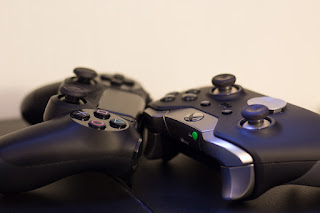
  Gaming Consoles Source From my readings and analysis of this weeks readings on game design I feel I have learnt a lot about this topic, firstly there is no 'one way' to define what a game is. But generally games have activities, rules, conflict, goals, involve decision making, and they are a form of art.  To create a game seems like an extremely challenging thing to do, but from my readings Im starting to believe that it might just be something achievable for anyone with the right motivation and love for game and design. To create a game is an organic process that involves a lot of idea generation. Game designers draw inspiration from just about anything! some examples include watching TV, movies, playing other games and even taking walks in nature when they get writers block. There is a lot of brain storming involved and designers often have group work sessions to get the ideas flowing, or, after generating an idea go to a colleague for feedback.  I learnt that generat...